Energy performance regulations in Europe
The Energy Performance of Buildings Directive (EPBD) is one of the European Union's main initiatives to improve building energy performance and reduce greenhouse gas emissions.
This directive supports the EU's objective of achieving a zero-emission building stock by 2050. It promotes energy efficiency, renewable energy integration, and greater use of Building Automation and Control Systems (BACS).
Across Europe, these requirements are being implemented through national regulations. In France, the BACS regulation is one of the main measures affecting commercial real estate owners and operators.
The BACS regulation
The BACS regulation is one of the key measures introduced to accelerate the energy transition of France's commercial real estate sector. Since 1 January 2025, it has required the most energy-intensive commercial buildings to be equipped with systems capable of automating and optimising energy consumption.
The objective is to improve building energy performance, reduce waste, and provide operators with effective tools to manage building systems. The challenge is doing so in buildings that often contain a mix of technologies, limited budgets and occupied spaces.
Understanding the BACS regulation: a requirement designed for action
BACS stands for Building Automation and Control Systems. The regulation aims to strengthen the automation of technical building systems in commercial buildings in order to optimise energy consumption.
It forms part of the European "Fit for 55" programme, which aims to reduce greenhouse gas emissions across the European Union. In practical terms, emissions must be reduced by 55% by 2030 compared with 1990 levels.
The requirements are clear. Compliant systems must be able to:
- Continuously monitor and record energy production and consumption data from HVAC systems (heating, ventilation and air conditioning). Integrated lighting systems, domestic hot water production and on-site electricity generation are also included.
- Detect performance issues or unusual energy consumption patterns and provide this information to building operators so that corrective action can be taken.
- Assess building energy performance against reference values and automatically adjust operating settings to improve efficiency.
- Allow manual override and autonomous management of BACS-controlled systems.
- Communicate and interact with connected equipment through interoperable technologies, standard protocols and software platforms.

BACS compliance timeline: who is affected and when?

The BACS regulation applies to both new and existing commercial buildings and requires the implementation of building automation and control systems.
Compliance deadlines depend on the nominal power of the technical systems installed:
- Buildings with systems exceeding 290 kW have been required to comply since 1 January 2025. This threshold is commonly reached in office buildings, shopping centres, hotels, educational facilities and healthcare buildings.
- Buildings with systems exceeding 70 kW must comply by 1 January 2027.
Energy performance and compliance: closely connected objectives

The purpose of the BACS regulation goes beyond administrative compliance. It represents a shift in the way technical building systems are managed.
By equipping buildings with systems capable of making automated decisions and detecting performance deviations, the regulation encourages a more sustainable approach to energy management.
The benefits extend beyond compliance:
- Significant reductions in energy consumption.
- Lower operating costs.
- Improved occupant comfort.
- Longer equipment lifespan.
- Contribution to carbon reduction objectives.
The challenge is achieving compliance without disrupting daily operations or requiring major capital investment. For many building owners and operators, this means finding ways to modernise building performance without interrupting the way the building functions.
Why BACS compliance can be challenging in practice
Most commercial buildings already have technical systems in place. Heating may be managed by one system, ventilation by another, while a partial Building Management System (BMS) or connected lighting controls operate independently.
The difficulty is that these systems were often installed at different times and use different communication protocols. As a result, they rarely work together effectively.
Replacing all existing systems to comply with the regulation would be expensive, time-consuming and technically disruptive, particularly in occupied buildings.
This lack of interoperability makes it difficult to centralise data and monitor building performance in real time. Yet interoperability is one of the key requirements of the BACS regulation.
The Trigrr approach: flexible, efficient and interoperable
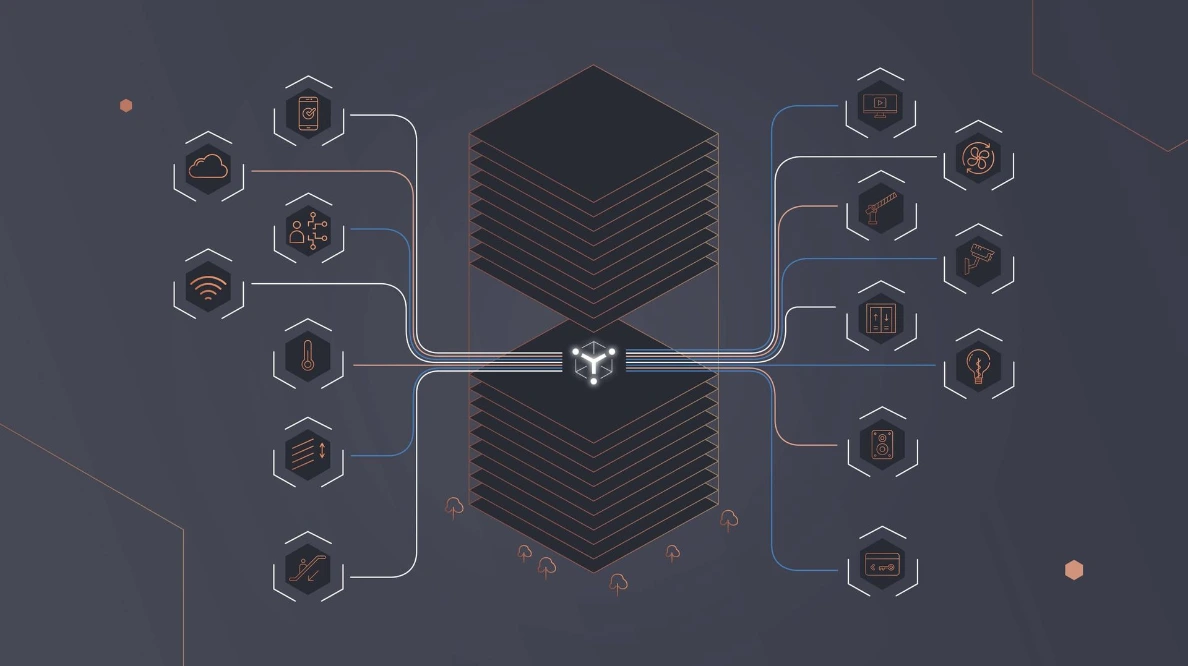
Rather than introducing another Building Management System, Trigrr takes the opposite approach: building on the technologies that are already in place.
Our Building Operating System (BOS) uses Trigrrnometry to create a shared operational layer across building technologies. This allows teams to centralise data and control connected systems regardless of manufacturer, age or communication protocol.
Buildings already equipped with BMS platforms, lighting systems, solar installations or connected sensors can be integrated into Trigrr without replacing existing equipment.
This interoperable approach adapts to complex technical environments while helping organisations avoid unnecessary investment in new infrastructure.
Proactive notifications and occupant comfort support energy performance
Improving energy performance is not only about reducing energy consumption. It also depends on how effectively building systems are used and managed.
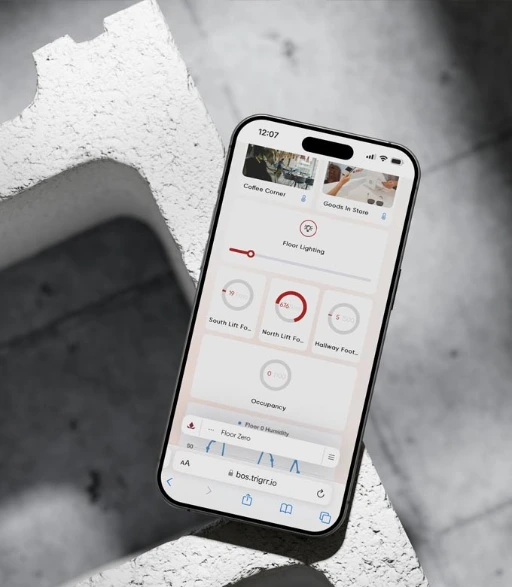
Trigrr's monitoring capabilities generate intelligent notifications whenever unusual behaviour is detected. This may include overheating in a specific area, a meeting room operating despite being unoccupied, or unexpected changes in energy consumption.
Alerts can be configured according to the needs of each building and operations team.
These notifications make day-to-day management easier by helping teams identify and correct issues before they appear on an energy bill or during an external audit.
At the same time, they contribute to occupant comfort. Indoor conditions remain more stable when lighting reflects actual occupancy, temperatures remain consistent between spaces, and ventilation adapts to how rooms are being used.
Supporting broader energy reduction objectives
The BACS regulation is often the first step towards a broader energy strategy.
Compliance also helps prepare buildings for the requirements of France's Tertiary Decree, which requires progressive reductions in energy consumption compared with 2010 levels:
- 40% by 2030
- 50% by 2040
- 60% by 2050
Data collected through a platform such as Trigrr helps organisations track performance over time, evaluate improvement scenarios and document progress.
This supports reporting through the OPERAT platform while helping teams make informed investment decisions.
Some operators already use these insights to build long-term energy performance plans with measurable objectives, prioritised actions and clearly defined returns on investment.
Turning BACS compliance into continuous optimisation with Trigrr
The BACS regulation is driving a significant evolution in the management of commercial buildings. By encouraging automated energy management, continuous monitoring and ongoing optimisation, it creates the conditions for more efficient, responsive and sustainable building operations.
The challenge is finding the right tools to achieve these objectives.
By connecting existing technologies without disruptive works, centralising operational data and providing a unified view of building performance, Trigrr helps owners and operators meet BACS requirements while making better use of the systems they already have.
To learn more about integration approaches, practical use cases or measurable outcomes, get in touch with our team.


